

How often do you have to do Botox is a practical question, not one of vanity. You want to plan time, budget, and expectations. You also want to avoid doing too much, too soon. Most people repeat Botox injections every 3 to 4 months, but your timing can shift based on your face and your goals.
If you’re considering Botox for the first time, it’s useful to know what timing is typical and why some people need treatments more or less often.
What is botulinum toxin, and how does Botox work?
Botox is a brand name for an injectable form of botulinum toxin. The basic idea is simple: Botox treatment reduces muscle contraction in a targeted way. The toxin helps to soften common signs of aging caused by repeated facial movement. The American Academy of Dermatology describes the procedure as a dermatologist injecting “very small amounts of purified botulinum toxin.”
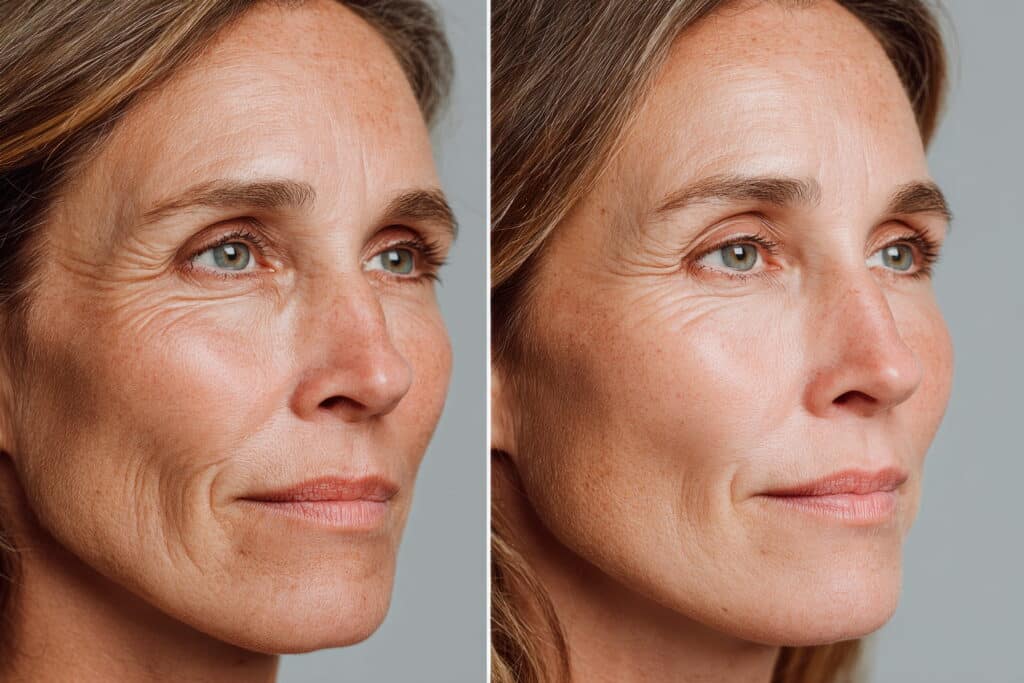
When the targeted facial muscles relax, the skin above them creases less. That’s why Botox is best known for improving dynamic wrinkles (wrinkles that form with movement), including fine lines and wrinkles.
It does not fill the skin like a dermal filler. Instead, Botox works underneath the skin, at the muscle level.
How often do you have to do Botox on average?
Across most medical sources, the most common recommendation is every 3 to 4 months. The Cleveland Clinic explains it simply: “On average, the effects of Botox last about three to four months. Retreatment is recommended at this time.”
That said, this is the middle of the range, not a fixed rule. Some dermatology reviews report that Botox effects can last closer to 4 to 6 months, particularly after repeated treatments or in areas with less muscle movement. In these cases, muscle activity may return more slowly, allowing results to hold longer between sessions.
In real life, timing often falls on a spectrum. Some people notice movement returning at three months, while others feel comfortable waiting longer. The most useful guide is not the calendar, but how your own face responds as early signs of aging gradually reappear.
Why does Botox wear off, even if it works well?
Botox is temporary by design. Your nerves gradually recover their ability to signal the muscle. Over time, the treated muscle slowly regains movement. That’s why Botox results fade gradually rather than shutting off overnight.
This is also why consistent timing can feel more stable than waiting until everything fully returns. It’s not about chasing perfection. It’s about keeping the result smooth and predictable, in a way that still looks like you.
Which treated area changes the timing the most?
The treated area matters because different muscles have different strengths and patterns. Areas you move constantly can come back faster. Areas you barely move may last longer. This is one reason two people can receive the same product and still have different timelines.
In areas like frown lines between the eyebrows and the forehead, movement may return a bit sooner. Other areas tend to be calmer. Muscles around the eyes or in less expressive zones may relax longer. In those cases, results can last closer to four months or, for some people, even longer.
In simple terms, Botox timing often depends on muscle activity.
The more you use a muscle, the more quickly it may regain movement.
Common patterns seen in practice include:
- Frown lines: often need more frequent touch-ups
- Forehead lines: timing varies based on expression habits
- Crow’s feet: may last slightly longer for some people
This is why two people can receive Botox on the same day and still come back at different times. Your face sets the schedule more than the calendar does.
How long does the treatment take in real life?
People often worry that the appointment will be a big event. In reality, it’s usually quick. The procedure usually takes about 10 minutes.
So when someone asks how long the treatment is, the honest answer is: it’s often shorter than the drive there. You can usually go back to your day right after. You may have tiny bumps at injection points for a short time, and sometimes mild redness.
Quick “day-of” reminders:
- Avoid rubbing or pressing hard on the injected sites for several hours
- Ask your provider about exercise timing and aftercare
- Expect small, temporary marks near injection points
When do Botox results start to show?
This part is very human: people get Botox and then stare into the mirror the next morning. That’s normal. But Botox needs time. Botox injections “usually begin working 1 to 3 days after treatment, and it can take a week or more to see full results.
So if you feel impatient on day two, you’re not failing Botox. You’re just early in the timeline. Most people see the best results of their result around the 1–2 week mark.
Is it okay to do Botox more often than every 3 months?
This is where calm, clear boundaries matter. According to the FDA labeling: “The safety and effectiveness of dosing more frequently than every 3 months have not been clinically evaluated.”
So in most cases, the safest planning assumption is to treat no sooner than about 3 months, unless your clinician has a specific medical reason to advise differently.
What makes Botox fade faster for some people?
This is where nuance helps. Some faces are simply more expressive. Some muscles are stronger. And some lifestyles may shift how long the effect seems to last.
Here are common factors clinicians discuss:
- Stronger baseline muscle activity (especially in the upper face)
- Highly expressive habits (frequent squinting or frowning)
- First-time treatments sometimes feel shorter
- Dose and placement decisions (your injector’s plan matters)
Men also commonly choose Botox. However, facial muscles tend to be stronger on average for me, so some may notice that results fade slightly sooner.
Final Takeaway
How Often Do You Have to Do Botox? For most people, the answer settles around every three to four months, but yours can be a little different. Watch for when your Botox results start to fade and when your facial muscles feel more active again. With a steady routine and realistic expectations, Botox can be a simple, low-drama part of anti-aging care.